Quick Answer
Pilates exercises for core strength focus on controlled movements that activate deep abdominal muscles, especially the transverse abdominis. Key exercises include the Hundred, Plank, Leg Circles, Roll-Up, and Single-Leg Stretch. These improve stability, posture, and overall core conditioning when performed consistently.
Why Pilates Is Effective for Core Strength
Pilates is designed to build strength from the inside out. Unlike traditional workouts that target surface muscles, Pilates focuses on deep core muscles, including:
- Transverse abdominis
- Pelvic floor
- Obliques
- Lower back stabilizers
These muscles form the body’s support system. Strengthening them improves posture, balance, and reduces injury risk.
Pilates for core muscles also emphasizes breathing and control. Each movement is slow and intentional, forcing your core to stay engaged throughout.
Core Engagement Techniques in Pilates
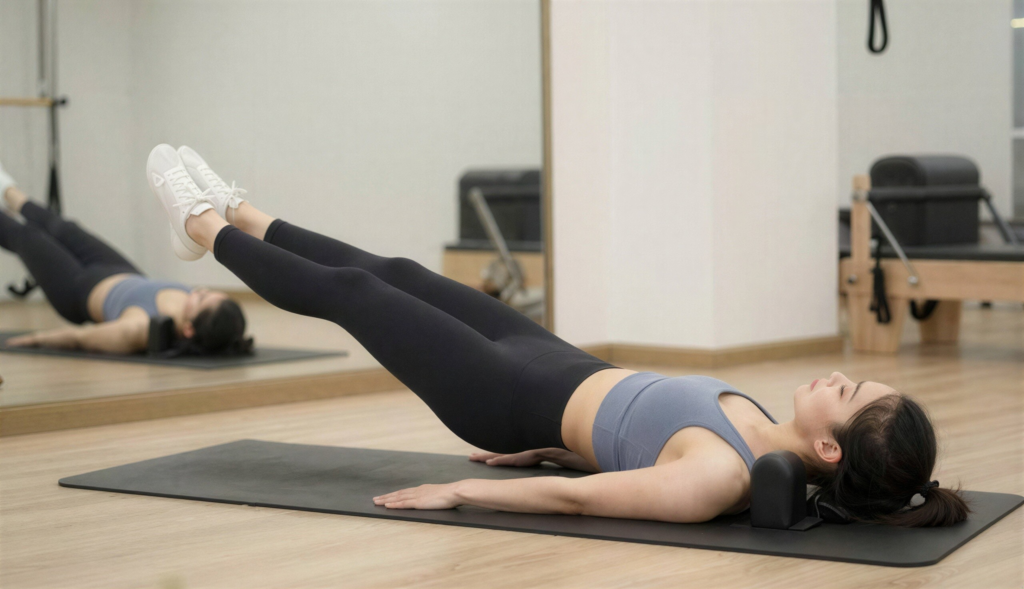
Before starting any movement, core engagement is required. This is the foundation of all Pilates abdominal exercises.
Key Techniques:
- Draw the navel toward the spine
- Maintain neutral spine alignment
- Avoid holding breath
- Activate pelvic floor gently
These pilates core engagement techniques ensure that every movement targets the correct muscles.
Best Pilates Exercises for Core Strength
1. The Hundred
This is a classic Pilates core workout routine starter.
How to do it:
- Lie on your back
- Lift legs to tabletop position
- Raise head and shoulders
- Pump arms up and down
Benefits:
- Builds endurance
- Activates deep core
- Improves breathing control
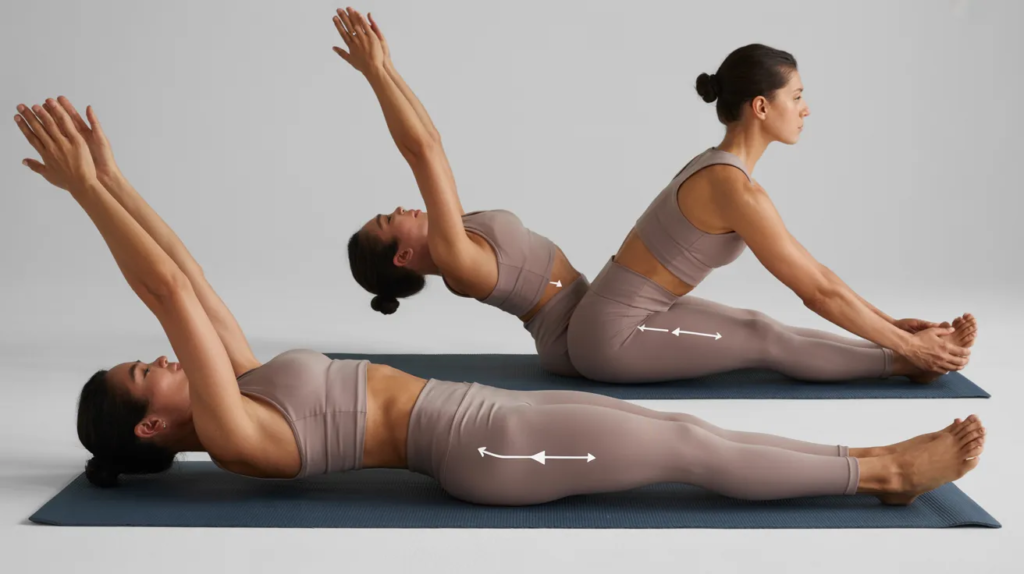
2. Roll-Up
One of the best pilates moves for core stability.
Steps:
- Lie flat with arms overhead
- Slowly roll up vertebra by vertebra
- Reach forward, then return down
Benefits:
- Strengthens abdominal muscles
- Improves flexibility
- Enhances spinal control
3. Plank (Pilates Style)
Pilates plank differs from traditional plank by focusing on alignment and control.
Steps:
- Hold body in straight line
- Engage core deeply
- Avoid sagging hips
Benefits:
- Full core conditioning
- Builds endurance
- Strengthens shoulders and back
4. Single-Leg Stretch
A key movement in pilates transverse abdominis exercises.
Steps:
- Lift head and shoulders
- Alternate pulling one knee toward chest
- Keep core tight
Benefits:
- Targets lower abs
- Improves coordination
- Builds stability
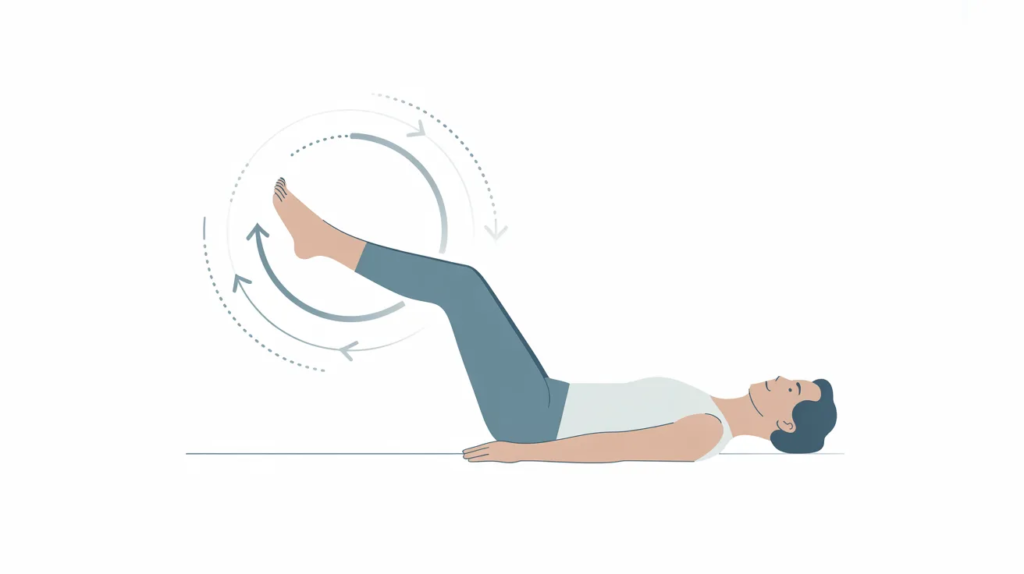
5. Leg Circles
One of the most effective pilates core stability exercises.
Steps:
- Lie flat with one leg extended upward
- Draw circles slowly
- Keep hips stable
Benefits:
- Improves control
- Strengthens lower core
- Enhances mobility
Best Pilates Core Workout for Beginners
Beginners should start with a simple routine:
10–15 Minute Routine:
- The Hundred – 1 minute
- Roll-Up – 8 reps
- Single-Leg Stretch – 10 reps each side
- Plank – 30 seconds
- Leg Circles – 8 each direction
This pilates core workout routine builds a strong foundation without overloading the body.
Pilates for Core Definition and Stability
Pilates for core definition is not about quick results. It focuses on:
- Muscle control
- Endurance
- Postural alignment
Over time, consistent practice leads to visible definition and a stronger midsection.
Pilates core conditioning also improves:
- Athletic performance
- Daily movement efficiency
- Injury prevention
Best Pilates Equipment for Core Strength
While mat Pilates is effective, equipment can enhance results.
Recommended Tools:
- Resistance bands
- Pilates ring
- Stability ball
- Reformer machine
These tools increase resistance and challenge your core further.
Best Pilates Classes for Core Training
Structured classes provide guidance and progression.
Benefits:
- Proper technique correction
- Progressive difficulty
- Accountability
Options include:
- Studio classes
- Online sessions
- Hybrid programs
Best Pilates Instructors for Core Exercises
A qualified instructor ensures safe and effective training.
Look for:
- Certified Pilates training
- Experience with beginners
- Focus on core mechanics
Instruction quality directly impacts results.
Best Pilates Videos for Core Strength
Video-based workouts are useful for home training.
Features to look for:
- Clear instructions
- Slow demonstrations
- Focus on form
These support consistent practice and learning.
Best Pilates Apps for Core Workouts
Apps provide structured routines and tracking.
Useful features:
- Daily plans
- Progress tracking
- Guided sessions
They help maintain consistency, which is essential for core strengthening pilates moves.
Best Pilates Books for Core Exercises
Books provide deeper understanding.
Benefits:
- Technique breakdown
- Exercise variations
- Anatomy insights
They are useful for long-term improvement.
Best Pilates Studios for Core Training
Studios offer professional environments.
Advantages:
- Specialized equipment
- Expert supervision
- Structured programs
Ideal for advanced pilates for strong core development.
Common Mistakes to Avoid
- Holding breath during exercises
- Using momentum instead of control
- Ignoring posture alignment
- Overtraining without recovery
Avoiding these ensures effective pilates core stability exercises.
How Often to Do Pilates for Core Strength
- Beginners: 3 times per week
- Intermediate: 4–5 times per week
- Advanced: daily with variation
Consistency is the key factor in developing a strong core.
Final Takeaways
- Pilates targets deep core muscles effectively
- Proper technique is essential for results
- Consistency improves strength and stability
- Beginners should start with simple routines
- Equipment and guidance enhance progress
People Also Ask
What is the most effective Pilates exercise for core strength?
The Hundred and Plank are among the most effective due to full core engagement.
Can beginners build core strength with Pilates?
Yes. Beginner routines are specifically designed to activate and strengthen core muscles safely.
How long does it take to see results?
Visible and strength improvements typically appear within 4–6 weeks of consistent practice.
Is Pilates better than gym workouts for core?
Pilates is more focused on deep core muscles and control, while gym workouts often target surface muscles.